

Blood pressure is constantly changing.
It responds to your day: how you slept, a stressful meeting, your morning coffee, a walk after lunch. Signal Ring uses an optical sensor to take readings throughout your day, so you can see how everyday life shows up in your blood pressure.

Signal Ring listens continuously.
Every time you heart beats, the shape and timing of your pulse shifts depending on your blood pressure. Signal Ring's sensor picks up those changes directly without stopping or interrupting anything. The ring simply reads what your pulse is already telling it.

Realtime tracking
Watch your blood pressure being measured live right before your eyes in ten second increments. See right in the app how different activities can affect your readings.

Zen Mode
Zen Mode lets you take a calm, guided reading whenever you are curious about how your daily activities may affect your pressure. No cuff. No stress.

Background readings
Your blood pressure moves all day, most of it happening when you'd never think to check. Signal Ring quietly builds the full picture of your day in the background, whether you ever open the app or not.

The full-day picture
Our blood pressure rises and falls constantly in response to everything you do. Background readings build into a view of your blood pressure across the whole day that a single cuff reading could never give you.

Your daily chart
Signal Ring plots your pressure across the whole day, so you see how it actually moved, not just where it landed at one snapshot.
That's why you can skip calibration.
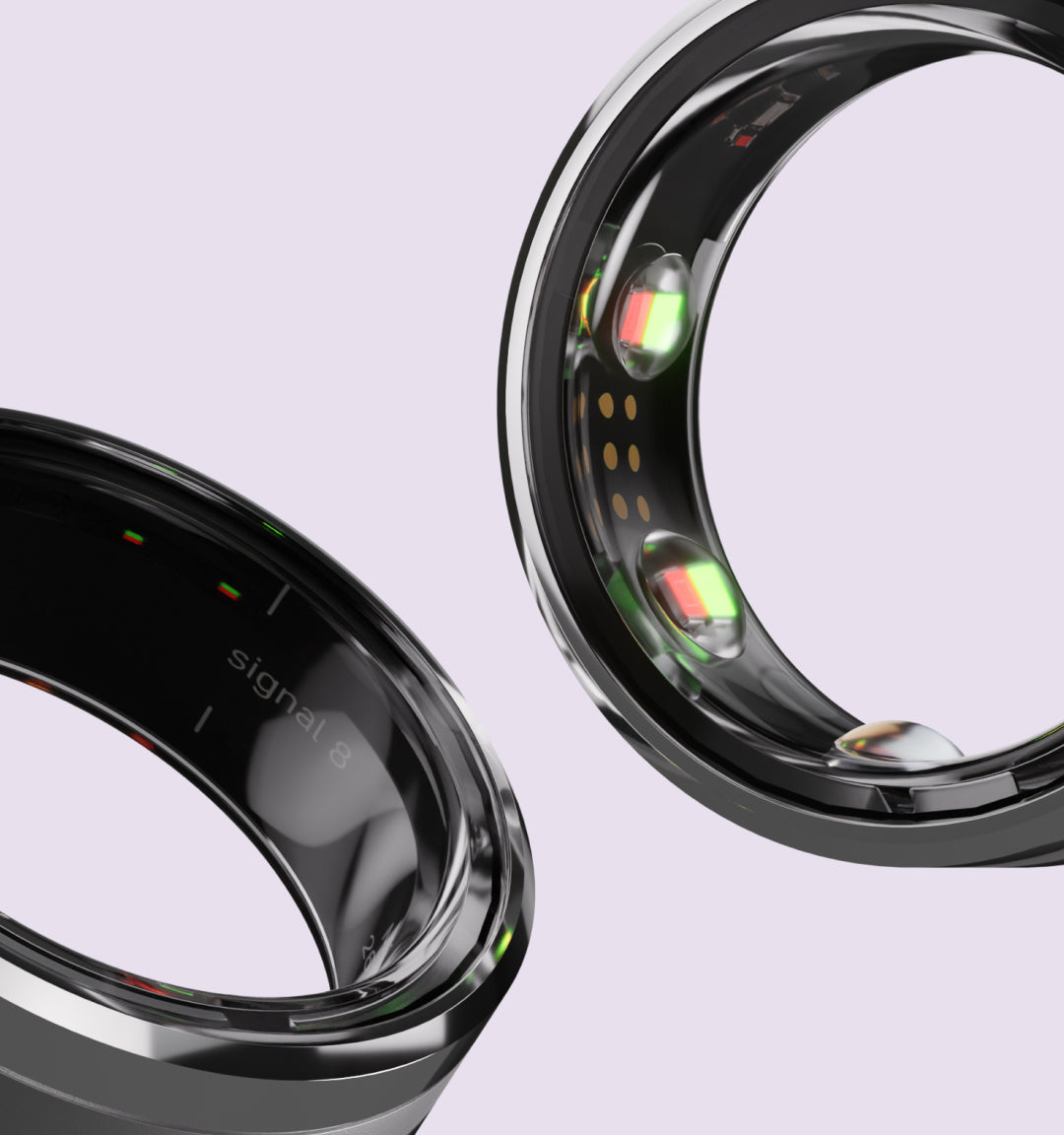
Signal Ring’s high speed sensor catches so much detail and is fast enough to tell your arteries simply shifting apart from your blood pressure actually changing. That's what makes a baseline unnecessary, and what makes calibration a thing of the past.
¹ Not for medical diagnosis. All readings are for informational purposes only. The Signal Ring and Signal App do not provide medical advice. Always consult your physician with any health concerns.