
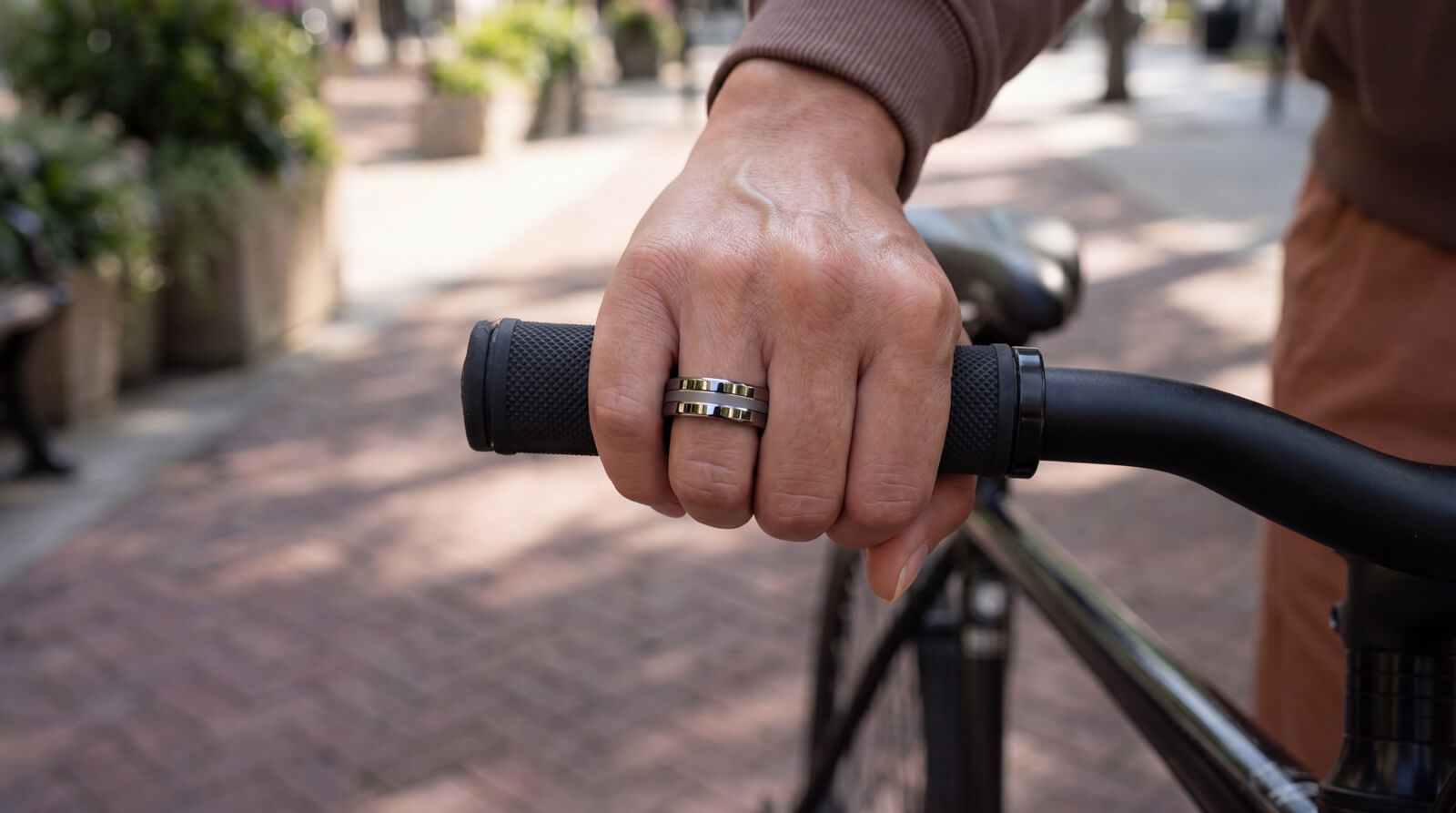
It varies, and that's the honest answer. Blood pressure wearables range from carefully validated to barely tested, so accuracy depends entirely on the device and on how it was proven. The useful question isn't whether wearables can be accurate. It's how a given device was tested, and whether it holds up in real life. And no wearable today replaces a clinical diagnosis. A trustworthy one will tell you so.
What "accurate" actually means here
A cuff measures pressure directly. A wearable doesn't. It reads the signals your pulse creates and translates them into a number, and that translation is where accuracy is won or lost.
So accuracy isn't one figure on a spec sheet. It's how closely a device tracks your real blood pressure across the situations you actually live in: not just sitting still in a quiet room, but moving, resting, stressed, and everything in between.
What affects a wearable's accuracy
A few things separate a number you can trust from one you can't:
-
How, and how often, it's calibrated. Many wearables are calibrated against a traditional cuff, and that reference drifts over time, so accuracy can quietly fade between calibrations.
-
Real life. A reading taken sitting still is the easy case. Staying accurate during exercise, during sleep, or after medication is harder, and not every device is tested for any of it.
-
Fit and position. Where a device sits and how it's worn changes the signal it reads.
-
Who it was tested on. A device validated on a narrow group can be less accurate for everyone outside it. Broad testing, across different ages, skin tones, and health conditions, is what makes a reading trustworthy for you.
How to tell if a wearable is accurate
Look past the marketing number and ask how it was earned. Was the device tested against a reference standard? Across how many people, and how varied a group? Under real-world conditions, or only at rest? The devices worth trusting are specific about how they were validated. Be cautious with any that make a big accuracy claim and stay vague about the proof behind it.
Where Signal Ring stands
Two things we'll always be straight about: Signal Ring is built to give you a reading you can trust day to day, and it is not a diagnostic device or a replacement for your doctor.
It also sidesteps the calibration problem above entirely. Signal Ring never uses a cuff, including to calibrate, so there's no baseline to set and no drift between readings.
A wearable's job is to give you a fuller, more honest picture of your blood pressure between visits, not to make the call a clinician makes.
Share:
Why cuffless blood pressure monitors need calibration